
How can Norway’s forest roads meet the demands of a changing climate?
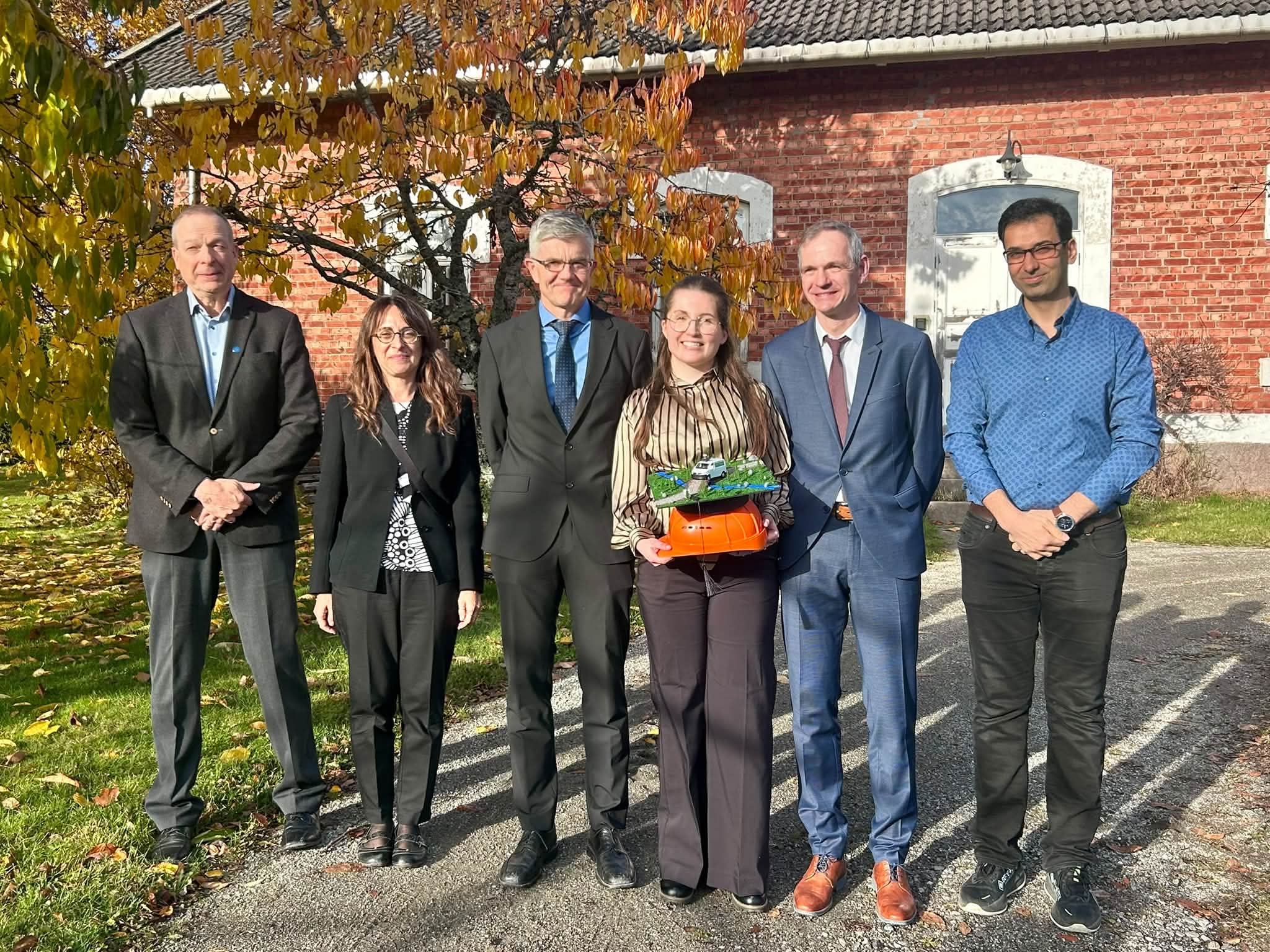
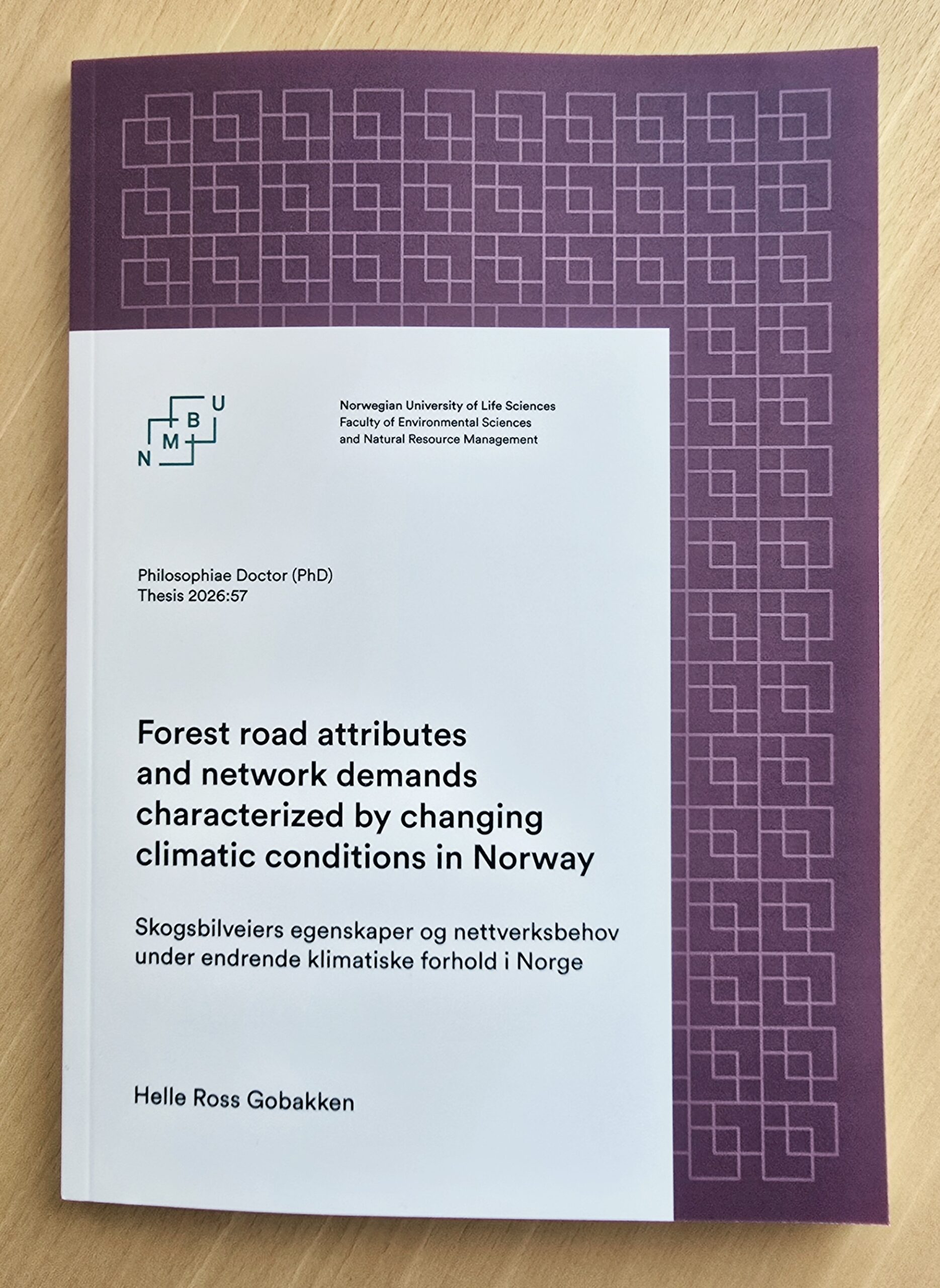
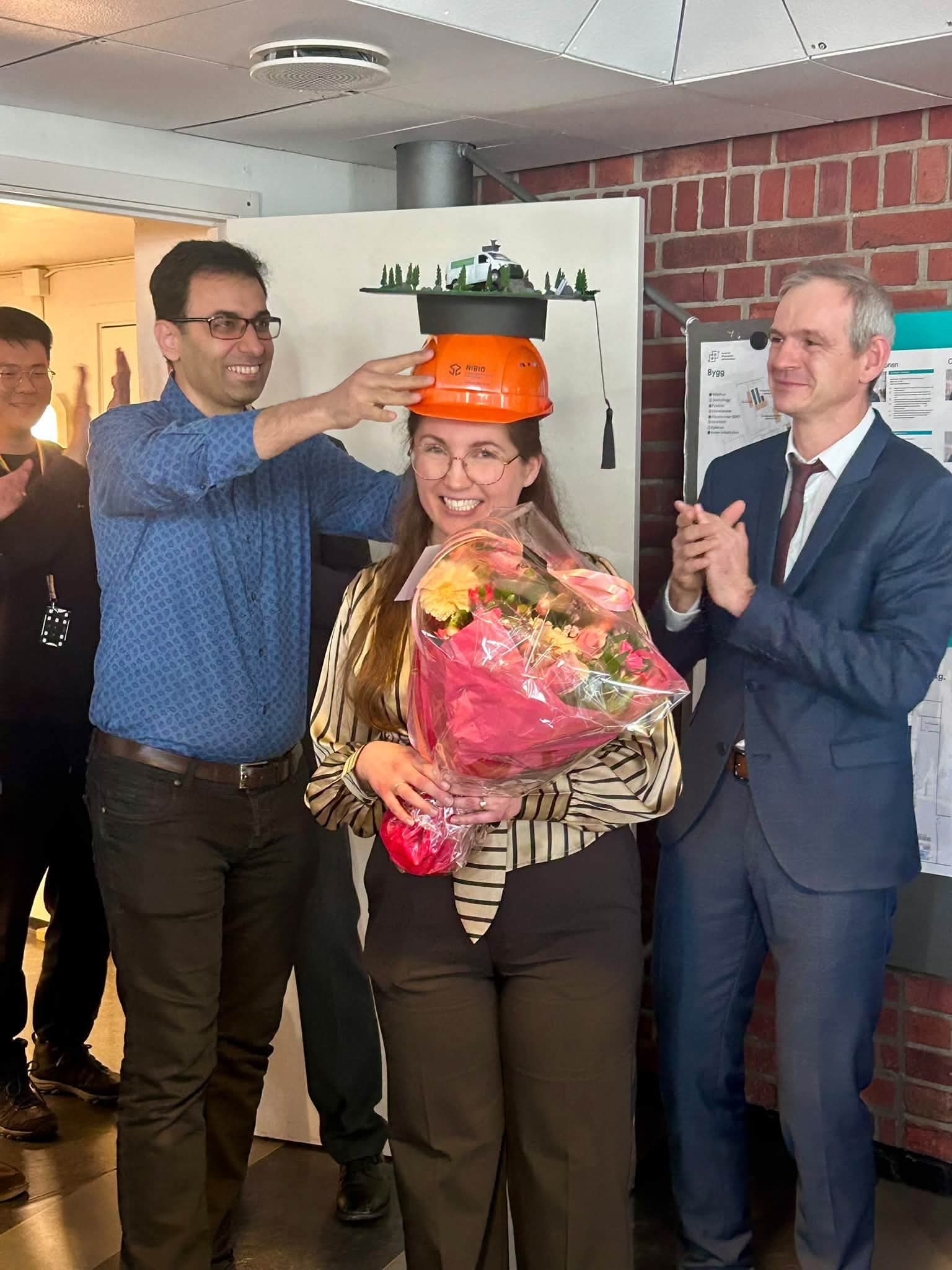
Congratulations to Helle Ross Gobakken at NIBIO on defending her PhD!
Her research explores how new technologies and better drainage design can support forest road management under changing climatic conditions. Forest roads are essential for sustainable forest management—but maintaining them requires reliable information about road conditions and vulnerabilities.
Here, Helle’s thesis offers three key insights:
- More efficient road inventories: The RoadSens sensing platform can measure geometric road characteristics with sufficient accuracy to support technical classification and maintenance monitoring.
- Potential for automated classification: RoadSens data can help classify forest roads according to Norwegian standards. However, vegetation obscuring road edges and ditches remains a challenge.
- A case for proactive climate adaptation: Undersized culverts were found in both study areas across all precipitation scenarios examined. The economic analysis indicated that proactively replacing them with culverts designed for more severe rainfall events and adjusted for climate change was economically justified, despite substantial upfront costs.
The take-home message: Better road data and proactive drainage upgrades can help target maintenance and climate adaptation where they are needed most.
Many thanks to her PhD supervisors Stephan Hoffmann and Mostafa Hoseini as well as to the Evaluation committee with Natascia Magagnotti (National Council for Research, Institute for BioEconomy, Italy, Jori Uusitalo, University of Helsinki, Finland and Ole Martin Bollandsås, NMBU, Norway.
Read the already published articles from Helle’s thesis here:
- Toward automation in forest road classification: opportunities and limitations of geometry extraction from a mobile sensor platform.
- RoadSens: An integrated near-field sensor solution for 3D forest road monitoring
images: Lone Ross